
Coping Strategies Under Pressure
All the Bright PlacesThis thread compares Finch’s personal survival rituals with their limits as his mental-health crisis deepens.
increasing Bearing strength in each event
 decreasing
Bearing strength in each eventdecreasingThe Wall of Thoughts

The Wall of Thoughts
Making thoughts visible
Theodore Finch places scraps of writing, song fragments, and ideas on Finch’s Wall of Thoughts. The wall lets him preserve thoughts he fears will vanish.
Order without treatment
Writing gives him temporary structure and a sense of agency. Yet the wall cannot explain or prevent the Asleep episodes and black moods.
The practice reveals creativity functioning as both expression and improvised self-management.
Running to Feel Alive

Running to Feel Alive
Physical proof
Theodore Finch runs long distances and crosses bridge walls to feel the risk and confirm that he is alive. Movement quiets his mind for a time.
A temporary relief
He runs when anxiety or dark thoughts press in, but the relief does not last. His repeated reliance on exertion can conceal worsening distress from others.
The ritual is a genuine attempt to cope, not a substitute for sustained support.
Water as Shelter
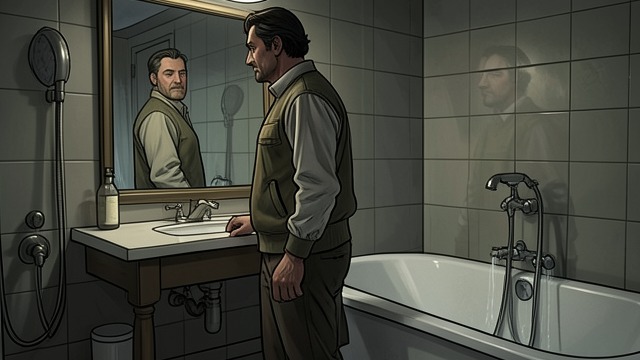
Water as Shelter
Quiet under the surface
Theodore Finch describes baths, streams, and swimming as ways to silence the noise in his mind. Water feels safe because it narrows his attention.
Refuge turns risky
At Blue Hole, his dive lasts dangerously long and frightens Violet Markey. The same refuge that steadies him can remove him from help.
The motif binds comfort and danger without making water a reliable cure.
The Closet Fort

The Closet Fort
Controlling the environment
Theodore Finch moves into his closet, bringing music, writing materials, and objects tied to Violet Markey. The small space limits noise and demands less of him.
Isolation deepens
He calls the retreat temporary, but his withdrawal makes it difficult for family and friends to understand the severity of his condition. Violet recognizes that he is living there.
A coping space becomes a sign that ordinary life feels unmanageable.
The Limits of Lists

The Limits of Lists
Rules under strain
Theodore Finch develops rules for staying awake and later writes steps for surviving emotional quicksand. The lists translate overwhelming feelings into manageable instructions.
Crisis exceeds the method
He still takes pills, leaves the hospital before a complete intervention, and eventually disappears. His strategies sometimes interrupt danger but cannot reliably contain it.
The novel treats practical coping as valuable while showing why it cannot carry the burden alone.
Early January
January, after the first meeting with Violet
January through February
March, after his expulsion
March, after taking sleeping pills
